Eid-ul-Adha Blessings: Meaning, Traditions, Wishes & Spiritual Lessons
Introduction
Eid-ul-Adha blessings bring joy, gratitude, compassion, and spiritual reflection to millions of Muslims around the world. Known as the Festival of Sacrifice, Eid-ul-Adha is one of the most important Islamic celebrations, reminding believers of faith, obedience, generosity, and devotion to Allah.
For Muslims living in the USA and across the globe, this sacred occasion is not only about celebration but also about strengthening family bonds, helping those in need, and embracing spiritual growth. Whether you are learning about the festival for the first time or looking for meaningful ways to celebrate, understanding the deeper message behind Eid-ul-Adha can make the experience more fulfilling.
In this comprehensive guide, you will discover the meaning of Eid-ul-Adha, its spiritual importance, traditions, blessings, practical celebration tips, heartfelt wishes, and expert insights to help you honor this holy festival with sincerity and purpose.
For more information please visit here
7 Heartfelt Eid-ul-Adha Blessings, Wishes & Traditions
Eid-ul-Adha is not just a festival; it’s a time of reflection, devotion, and generosity. Celebrated worldwide, it reminds us of sacrifice, gratitude, and the importance of family and community. Here are 7 heartfelt blessings and wishes that capture the true spirit of Eid thoughts.
1. Gratitude for Life and Family
Eid-ul-Adha encourages us to cherish our loved ones and be thankful for every moment we share. It reminds us that life’s greatest blessing is the presence of family and friends. Taking time to express gratitude strengthens bonds and nurtures happiness.
2. Strengthening Faith and Spirituality
This festival is a spiritual reminder to grow closer to God. Through prayer and reflection, we can renew our faith, seek guidance, and find peace within ourselves. Eid brings the opportunity to reconnect with our spiritual path.
3. Sharing Joy Through Charity
One of the most beautiful traditions of Eid is giving to those in need. Sharing food, wealth, or support spreads joy, creates equality, and fulfills a deep human desire to help others. Charity transforms blessings into meaningful action.
4. Unity and Togetherness
Eid brings communities together. Families, neighbors, and friends celebrate collectively, breaking barriers and strengthening bonds. It’s a moment to embrace unity, love, and mutual respect.
5. Peace and Forgiveness
Eid is a time to let go of grudges and forgive past mistakes. It teaches us the power of reconciliation and inner peace. Forgiveness is not only a gift to others but also to our own hearts.
6. Prosperity and Good Health
Celebrating Eid is a reminder to appreciate the blessings of health, well-being, and abundance. Wishing prosperity to others creates positive energy and fosters a hopeful mindset for the future.
7. Reflecting on Sacrifice and Devotion
At its core, Eid-ul-Adha commemorates sacrifice. This blessing inspires us to practice selflessness, discipline, and devotion, reminding us that true fulfillment comes from serving others and staying committed to our values.
What Is Eid-ul-Adha?
Featured Snippet Definition
Eid-ul-Adha is an important Islamic festival celebrated by Muslims worldwide to honor Prophet Ibrahim’s willingness to sacrifice his son in obedience to Allah. It symbolizes faith, sacrifice, compassion, gratitude, and charity. The festival includes special prayers, animal sacrifice (Qurbani), sharing food, and helping those in need.
The term Eid-ul-Adha translates to “Festival of Sacrifice.” It occurs during the Islamic month of Dhul Hijjah, following the completion of Hajj pilgrimage in Makkah.
This sacred festival teaches believers powerful values such as:
- Faith in Allah
- Selflessness
- Compassion for others
- Charity and generosity
- Gratitude for blessings
The Spiritual Meaning of Eid-ul-Adha Blessings
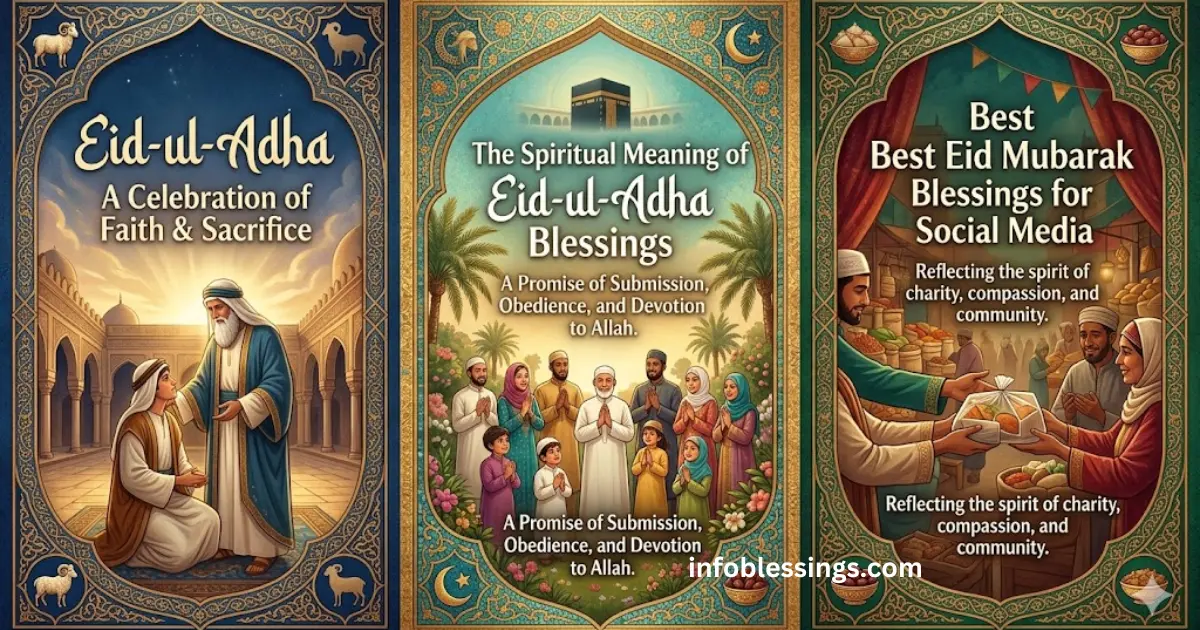
The true essence of Eid-ul-Adha blessings goes far beyond celebrations and feasts. It is deeply rooted in spiritual reflection and devotion.
1. Strengthening Faith
The story of Prophet Ibrahim demonstrates complete trust in Allah’s command. Muslims reflect on this lesson and renew their own commitment to faith and obedience.
2. Learning Sacrifice
Sacrifice is not only about animals; it also means sacrificing pride, greed, anger, and selfishness for spiritual growth.
3. Promoting Compassion
One of the biggest blessings of Eid-ul-Adha is sharing with the poor. Families distribute meat among relatives, neighbors, and underprivileged communities.
4. Encouraging Gratitude
The festival reminds people to appreciate health, family, food, and peace. Gratitude is a central part of Islamic teachings.
5. Building Community Connections
Mosques, community centers, and families gather together, creating unity and social harmony.
History Behind Eid-ul-Adha
Understanding the history helps people appreciate the deeper significance of the festival.
The Story of Prophet Ibrahim
According to Islamic tradition, Prophet Ibrahim saw a dream in which Allah commanded him to sacrifice his beloved son, Ismail. Although it was a difficult test, Ibrahim obeyed Allah with sincerity.
At the last moment, Allah replaced Ismail with a ram, rewarding Ibrahim for his faith and devotion.
This event became a timeless example of:
- Obedience
- Patience
- Trust in Allah
- Spiritual commitment
Today, Muslims honor this event through Qurbani, prayers, and acts of charity.
Why Eid-ul-Adha Blessings Matter Today
Modern life often becomes busy and stressful. However, Eid-ul-Adha blessings encourage people to slow down and focus on spiritual and human values.
Emotional Benefits
The festival creates happiness, belonging, and emotional connection among families and communities.
Spiritual Benefits
Muslims use this time for prayer, repentance, and self-improvement.
Social Benefits
Sharing food and charity helps reduce inequality and strengthens social unity.
Personal Growth
The festival encourages discipline, humility, and empathy.
Important Traditions of Eid-ul-Adha
1. Performing Eid Prayer
Muslims begin the day with special congregational prayers at mosques or open prayer grounds.
Benefits include:
- Spiritual purification
- Community bonding
- Gratitude to Allah
2. Performing Qurbani
Qurbani refers to the ritual sacrifice of an animal such as a goat, sheep, cow, or camel.
The meat is usually divided into three parts:
- Family
- Relatives and friends
- Poor and needy people
3. Wearing New or Clean Clothes
People wear their best clothes to honor the sacred occasion.
4. Visiting Family and Friends
Families gather for meals, conversations, and celebrations.
5. Giving Charity
Helping others is one of the greatest Eid-ul-Adha blessings.
Eid-ul-Adha Blessings for Families
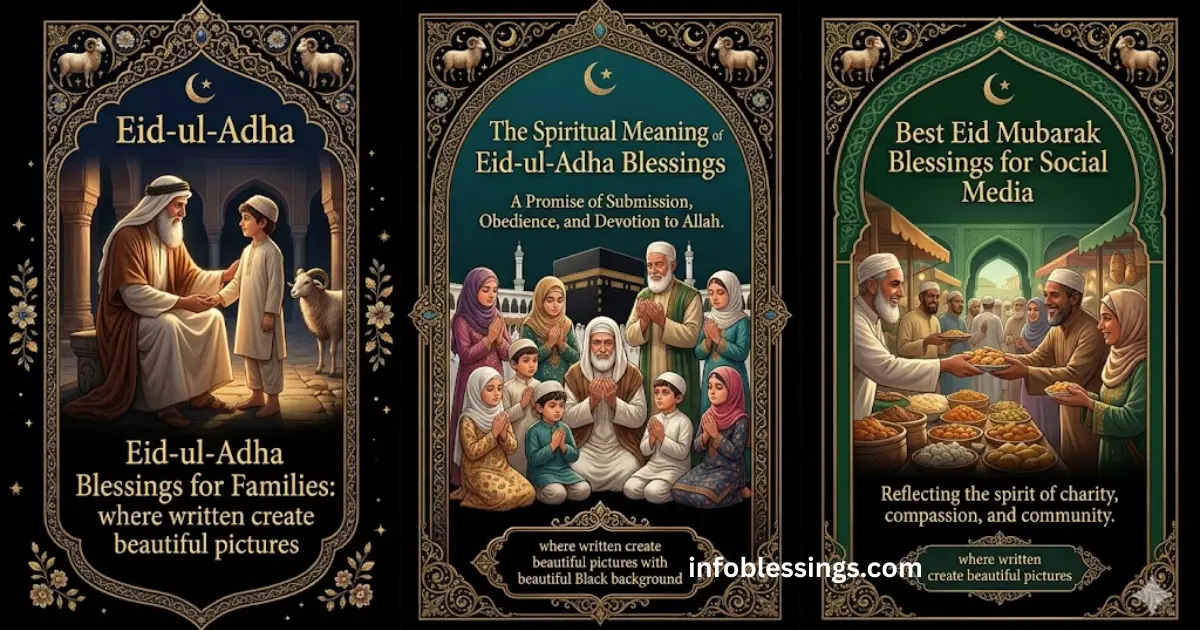
Families play a central role during Eid celebrations.
Creating Stronger Relationships
Eid gatherings improve communication and strengthen emotional bonds.
Teaching Children Islamic Values
Parents teach children about:
- Sacrifice
- Charity
- Respect
- Gratitude
Sharing Meals Together
Food traditions create memorable experiences and cultural connection.
Heartfelt Eid-ul-Adha Blessings and Wishes
Here are some meaningful messages you can share with loved ones.
Traditional Eid Wishes
- May Allah bless you with peace, happiness, and prosperity this Eid-ul-Adha.
- Eid Mubarak! May your sacrifices be accepted and your prayers answered.
- Wishing you joy, faith, and countless blessings this Bakrid.
Professional Eid Greetings
- Wishing you and your family a peaceful and prosperous Eid-ul-Adha.
- May this blessed occasion bring success and harmony to your life.
Emotional Family Wishes
- May our home always remain filled with love, faith, and Eid blessings.
- Sending warm wishes and prayers for health and happiness.
How Muslims Celebrate Eid-ul-Adha in the USA
Muslims in America celebrate Eid while balancing cultural traditions and modern lifestyles.
Community Gatherings
Mosques organize:
- Eid prayers
- Charity drives
- Community meals
- Family events
Multicultural Celebrations
American Muslim communities often include traditions from:
- South Asia
- Middle East
- Africa
- Turkey
Sharing with Neighbors
Many Muslims share food and gifts with non-Muslim neighbors to spread kindness and understanding.
Practical Ways to Experience Eid-ul-Adha Blessings
Focus on Gratitude
Spend time reflecting on your blessings rather than material possessions.
Help Someone in Need
Donate food, money, or time to charitable causes.
Reconnect with Family
Call relatives, visit loved ones, and resolve conflicts.
Practice Forgiveness
Eid is a perfect time to forgive and strengthen relationships.
Increase Spiritual Activities
Read Quran, pray, and engage in remembrance of Allah.
Step-by-Step Guide to Celebrating Eid-ul-Adha Meaningfully
Step 1: Prepare Spiritually
Before Eid:
- Increase prayers
- Seek forgiveness
- Practice gratitude
Step 2: Attend Eid Prayer
Join your local Muslim community for congregational prayer.
Step 3: Perform Qurbani
Ensure the sacrifice follows proper Islamic guidelines.
Step 4: Share with Others
Distribute meat and meals generously.
Step 5: Spend Quality Time with Family
Create joyful and meaningful memories.
Step 6: Continue Good Deeds After Eid
The spirit of generosity should continue beyond the festival.
Benefits of Eid-ul-Adha Blessings

Spiritual Benefits
- Stronger connection with Allah
- Increased faith
- Inner peace
Social Benefits
- Better community relationships
- Charity and social care
- Increased empathy
Emotional Benefits
- Happiness and joy
- Reduced loneliness
- Family bonding
Educational Benefits
Children learn important Islamic values and traditions.
Common Mistakes to Avoid During Eid-ul-Adha
1. Focusing Only on Material Celebrations
Eid is more than food, shopping, and entertainment.
2. Ignoring Charity
Helping others is one of the core purposes of the festival.
3. Overspending
Celebrations should remain balanced and responsible.
4. Forgetting Spiritual Reflection
Prayer and gratitude should remain central.
5. Neglecting Family Connections
Eid is an opportunity to strengthen relationships.
Expert Tips for Making Eid-ul-Adha More Meaningful
Prioritize Intentions
Actions become more valuable when done sincerely for Allah.
Involve Children
Teach children the meaning behind Eid traditions rather than only giving gifts.
Create Family Traditions
Simple activities like cooking together or sharing stories create lifelong memories.
Support Local Charities
Helping local communities increases social impact.
Practice Sustainability
Avoid food waste and distribute resources responsibly.
Eid-ul-Adha Blessings and Mental Well-Being
Modern studies show that gratitude, generosity, and social connection positively affect mental health.
How Eid Improves Emotional Wellness
- Encourages social bonding
- Reduces feelings of isolation
- Promotes gratitude
- Creates hope and positivity
Acts of giving also increase emotional satisfaction and happiness.
The Importance of Charity During Eid-ul-Adha
Featured Snippet Answer
Charity during Eid-ul-Adha reflects compassion and social responsibility in Islam. Muslims share food, money, and support with the poor to ensure everyone can participate in the celebration. This act strengthens communities, reduces hardship, and spreads kindness.
Forms of Charity During Eid
- Donating meat
- Feeding families
- Giving financial aid
- Supporting orphanages
- Volunteering
Eid-ul-Adha Food Traditions Around the World
Food is an important part of Eid celebrations.
Popular Eid Dishes
South Asian Cuisine
- Biryani
- Kebabs
- Nihari
Middle Eastern Cuisine
- Mandi
- Lamb dishes
- Stuffed rice
Turkish Cuisine
- Baklava
- Grilled meats
American Muslim Fusion Foods
Many families combine traditional Islamic dishes with American cuisine.
Differences Between Eid-ul-Fitr and Eid-ul-Adha
| Feature | Eid-ul-Fitr | Eid-ul-Adha |
|---|---|---|
| Meaning | Festival after Ramadan | Festival of Sacrifice |
| Main Focus | Gratitude after fasting | Faith and sacrifice |
| Charity Type | Zakat al-Fitr | Qurbani |
| Timing | End of Ramadan | During Hajj |
| Major Ritual | Breaking fast | Animal sacrifice |
Understanding these differences helps readers appreciate Islamic traditions more deeply.
The Role of Gratitude in Eid-ul-Adha Blessings
Gratitude transforms how people experience life.
Ways to Practice Gratitude During Eid
- Thank Allah regularly
- Appreciate family and friends
- Share blessings with others
- Avoid negativity
- Focus on meaningful moments
People who practice gratitude often experience greater peace and emotional resilience.
How to Share Eid-ul-Adha Blessings Online
Social media has become an important way to connect during Eid.
Best Online Sharing Ideas
- Post heartfelt Eid wishes
- Share charity initiatives
- Upload family moments respectfully
- Spread educational Islamic content
Avoid These Mistakes
- Showing off wealth excessively
- Posting insensitive content
- Ignoring privacy and respect
Eid-ul-Adha Blessings for Non-Muslims
Non-Muslims can also participate respectfully in the spirit of Eid.
Ways to Show Respect
- Learn about the festival
- Send kind wishes
- Join community events
- Appreciate cultural diversity
This helps strengthen mutual understanding and harmony in multicultural societies.
Key Benefits of Celebrating Eid-ul-Adha Meaningfully
Top Benefits at a Glance
- Strengthens faith
- Promotes generosity
- Encourages gratitude
- Improves family relationships
- Builds stronger communities
- Enhances emotional well-being
- Teaches compassion and humility
Pro Insights: How Eid-ul-Adha Reflects Universal Human Values
Although Eid-ul-Adha is an Islamic celebration, its lessons are universal.
The values of:
- Sacrifice
- Compassion
- Charity
- Gratitude
- Family unity
are meaningful for people from all backgrounds.
In today’s fast-paced world, these principles help individuals reconnect with humanity, spirituality, and purpose.
Conclusion
Eid-ul-Adha blessings are much more than festive celebrations. They represent faith, gratitude, sacrifice, compassion, and community. From the story of Prophet Ibrahim to modern family traditions in the USA, this sacred festival continues to inspire millions of people worldwide.
By focusing on spiritual growth, charity, gratitude, and meaningful connections, Muslims can experience the true beauty of Eid-ul-Adha. Whether through prayer, helping those in need, or spending time with loved ones, every act of kindness adds deeper meaning to the celebration.
As you celebrate this blessed occasion, remember that the greatest Eid blessings come from sincerity, compassion, and sharing happiness with others.
Eid Mubarak! May your life be filled with peace, prosperity, and endless blessings.
FAQs About Eid-ul-Adha Blessings
1. What are Eid-ul-Adha blessings?
Eid-ul-Adha blessings refer to the spiritual, emotional, and social benefits associated with the Islamic Festival of Sacrifice. These include faith, gratitude, charity, family unity, and compassion.
2. Why is Eid-ul-Adha important in Islam?
Eid-ul-Adha honors Prophet Ibrahim’s devotion and willingness to obey Allah. It teaches sacrifice, trust in Allah, generosity, and compassion toward others.
3. How do Muslims celebrate Eid-ul-Adha in the USA?
Muslims in the USA celebrate through Eid prayers, family gatherings, charity, community events, and sharing meals with friends and neighbors.
4. What is the meaning of Qurbani?
Qurbani is the ritual sacrifice performed during Eid-ul-Adha to honor Prophet Ibrahim’s obedience to Allah. The meat is shared with family, relatives, and the poor.
5. How can I make Eid-ul-Adha more meaningful?
You can make Eid meaningful by focusing on prayer, gratitude, charity, forgiveness, family bonding, and helping people in need.
For more relevant articles, see below
Eid Mubarak Blessings: Beautiful Wishes, Prayers & Messages to Share
200+ Good Morning Wednesday Blessings, Prayers & Images
150+ Tuesday Blessings, Quotes & Prayers for a Positive Day
15+ Sunday Morning Prayer of Gratitude & Blessings

I am an expert writer committed to delivering insightful, engaging, and results-driven business content. With a deep understanding of market trends and evolving industry dynamics, I create content that informs, empowers, and helps readers stay ahead in today’s competitive landscape.
My focus is on producing high-quality, value-driven content that not only captures attention but also builds trust and long-term impact. Let’s achieve more together!