
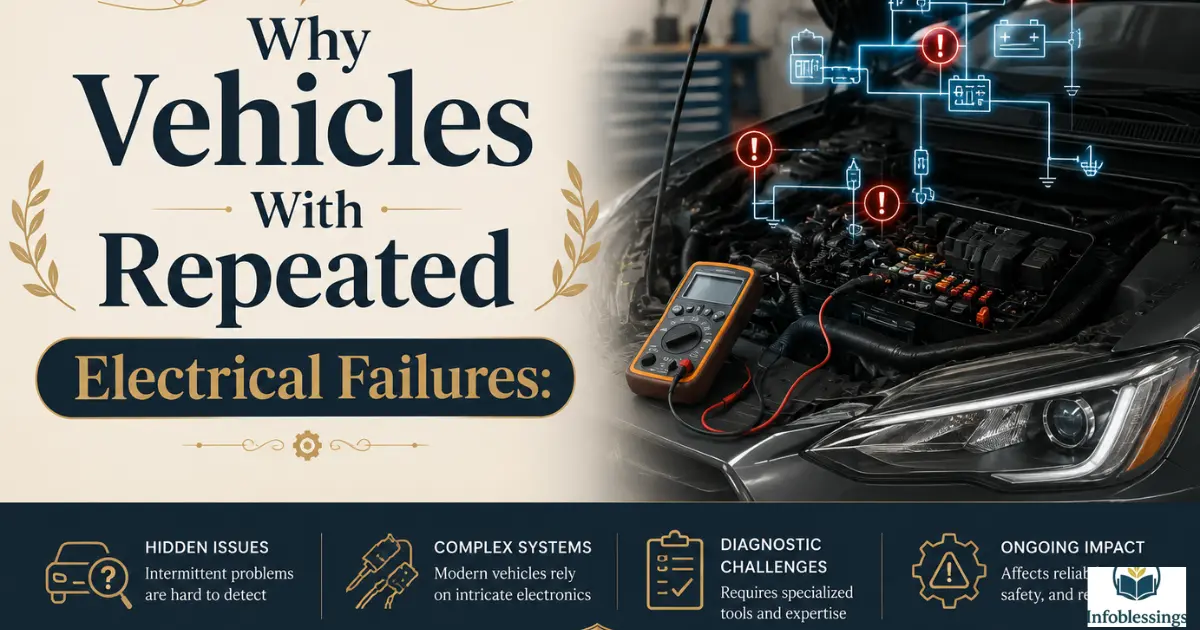
Why Vehicles With Repeated Electrical Failures Become Frustrating to Own
Electrical systems have become one of the most important parts of modern vehicles. From starting the engine to controlling safety features and infotainment systems, nearly everything inside today’s cars depends on electronics functioning properly.
When electrical problems begin happening repeatedly vehicle ownership can quickly become frustrating, unpredictable, and expensive. Unlike many mechanical problems, electrical failures are often difficult to diagnose because symptoms may appear randomly and affect multiple systems at once.
Modern Vehicles Depend on Complex Electronics
Older vehicles used relatively simple electrical systems focused mainly on lighting, ignition, and battery charging.
Today’s vehicles rely on advanced electronics for:
- Engine management
- Transmission control
- Touchscreen systems
- Backup cameras
- Safety sensors
- Keyless entry
- Climate controls
- Driver-assistance technology
A single modern vehicle may contain dozens of electronic modules constantly communicating with one another.
As these systems age, the chances of electrical malfunctions increase significantly.
Small Electrical Issues Can Affect Multiple Systems
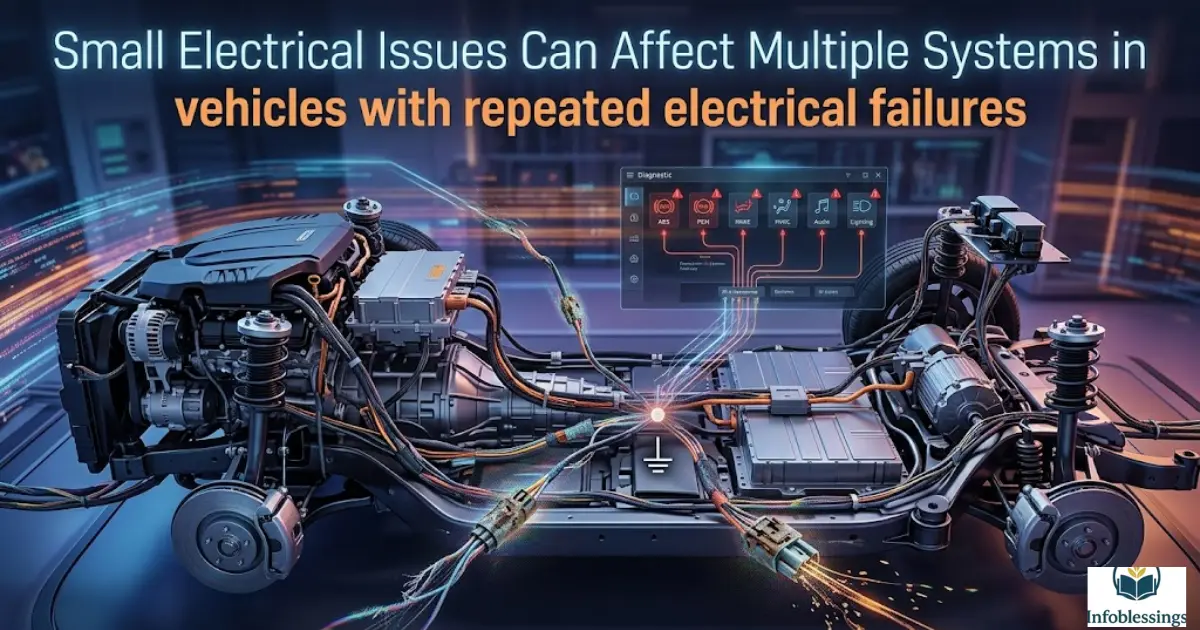
One of the biggest challenges with electrical problems is how interconnected modern systems have become.
A single failing component may trigger problems involving:
- Dashboard warning lights
- Power accessories
- Starting systems
- Transmission behavior
- Sensor communication
In some cases, one faulty sensor or damaged wire can create symptoms that appear completely unrelated.
This makes diagnosis far more complicated than many traditional mechanical repairs.
Moisture Is a Major Cause of Electrical Problems
Water exposure is one of the leading causes of long-term electrical failure.
Moisture may enter vehicles through:
- Damaged weather seals
- Windshield leaks
- Flood exposure
- Sunroof drainage problems
Once water reaches wiring or connectors, corrosion can slowly interfere with electrical signals.
These issues often worsen gradually over time and may create intermittent failures that are difficult to trace.
Aging Batteries and Charging Systems Create Instability
Modern electronics depend heavily on stable voltage.
Weak batteries or failing alternators can cause:
- Random warning lights
- Flickering displays
- Hard starting
- Sensor malfunctions
- Power loss
Older vehicles become especially vulnerable because aging charging systems struggle to support increasing electrical demands.
In many cases, low voltage alone may create symptoms that resemble much larger system failures.
Wiring Deteriorates Over Time
Vehicle wiring experiences constant exposure to:
- Heat
- Vibration
- Moisture
- Dirt
- Road salt
As insulation weakens and connectors corrode, wiring problems become more likely.
Older vehicles may develop:
- Short circuits
- Battery drains
- Intermittent power loss
- Faulty ground connections
Because wiring is hidden behind panels and throughout the vehicle, repairs often require extensive labor just to locate the problem.
Electrical Diagnostics Can Be Expensive
Unlike visible mechanical failures, electrical issues often require lengthy diagnostic procedures before repairs even begin.
Technicians may need to:
- Test circuits
- Inspect modules
- Scan fault codes
- Trace wiring
- Reprogram systems
Modern diagnostic equipment and specialized labor increase repair costs significantly.
For older vehicles, electrical troubleshooting alone may become expensive before any actual parts are replaced.
Intermittent Problems Are Especially Frustrating
Many electrical failures do not happen consistently.
Drivers may experience situations where:
- The car starts normally one day but not the next
- Warning lights appear randomly
- Accessories stop working temporarily
- Sensors malfunction intermittently
Because symptoms may disappear during inspections, diagnosing the root cause becomes much harder.
This uncertainty often makes repeated electrical problems particularly stressful for owners.
Electrical Failures Often Increase With Vehicle Age
As vehicles accumulate years of use, multiple electrical components may begin aging simultaneously.
An older car may eventually develop recurring issues involving:
- Sensors
- Battery systems
- Wiring harnesses
- Infotainment systems
- Power accessories
When several systems start failing together, repair costs can rise quickly.
For many owners, ongoing electrical problems become one of the main reasons aging vehicles feel unreliable despite still running mechanically.
Why Some Owners Eventually Move On From Aging Vehicles
Repeated electrical repairs can become financially difficult to justify when combined with other aging-related problems such as:
- Suspension wear
- Transmission issues
- Rust damage
- Engine leaks
At some point, the uncertainty and repair costs may outweigh the practicality of continued ownership.
This is one reason many drivers eventually consider alternatives such as Cash For Junk Cars once electrical reliability declines significantly in older vehicles.
Preventative Maintenance Helps Reduce Risk
While electrical problems cannot always be avoided completely, regular maintenance helps reduce long-term risk.
Helpful habits include:
- Replacing weak batteries early
- Addressing leaks promptly
- Cleaning battery terminals
- Investigating warning lights quickly
- Protecting wiring from corrosion
Early attention often prevents small electrical issues from spreading into larger failures.
Final Thoughts
Repeated electrical failures become frustrating because modern vehicles rely heavily on interconnected electronic systems that are difficult and expensive to diagnose as they age.
Understanding how electrical systems deteriorate over time helps drivers recognize warning signs earlier and make better decisions about maintenance, repairs, and long-term vehicle ownership.
For more information please visit our website
FAQs
1. What causes repeated electrical problems in vehicles?
Repeated electrical issues are often caused by aging wiring, weak batteries, moisture damage, corroded connectors, or failing electronic modules.
2. Why are electrical problems hard to diagnose?
Electrical failures can affect multiple systems at once and may happen intermittently, making the root cause difficult for technicians to identify.
3. Can a weak battery cause electrical malfunctions?
Yes, low battery voltage can trigger warning lights, sensor issues, hard starting, and random electronic failures in modern vehicles.
4. How can I prevent electrical problems in my car?
Regular battery checks, fixing leaks quickly, cleaning terminals, and addressing warning lights early can help reduce electrical issues.
5. When should I stop repairing an older vehicle with electrical issues?
If repair costs become frequent and expensive alongside other aging problems, replacing or selling the vehicle may become the more practical option.

I am an expert writer committed to delivering insightful, engaging, and results-driven business content. With a deep understanding of market trends and evolving industry dynamics, I create content that informs, empowers, and helps readers stay ahead in today’s competitive landscape.
My focus is on producing high-quality, value-driven content that not only captures attention but also builds trust and long-term impact. Let’s achieve more together!