
Growth Navigate Startup Tools: The Ultimate Guide for Startup Success
Introduction
In this guide, we’ll explore the most effective growth navigate startup tools, practical tips for using them, and strategies to scale your business successfully. Whether you’re a first-time entrepreneur or a seasoned professional, this article will give you actionable insights to thrive in today’s competitive startup ecosystem.
Launching a startup is thrilling, but navigating the journey from idea to sustainable growth can be overwhelming. That’s where the right Best startup growth navigate tools come in. These tools help streamline operations, improve productivity, and guide your startup toward measurable growth.
Learn for more information click here
What Are Best Growth Navigate Startup Tools?
Growth navigate startup tools are software platforms and applications designed to help startups scale efficiently, manage operations, and optimize their growth strategies. These tools cover areas such as marketing automation, project management, data analytics, and productivity enhancement.
Featured Snippet Example:
Q: What are growth navigate startup tools?
A: Growth navigate startup tools are software solutions that help startups manage operations, boost productivity, and accelerate growth through marketing, analytics, and collaboration platforms.
These tools are essential for startups to make data-driven decisions, save time, and stay competitive in the fast-paced business environment.
Top Categories of Startup Growth Tools
Choosing the right tools depends on your startup’s needs. Here’s a breakdown of the most effective categories:
Productivity Tools
Productivity tools help teams stay organized, manage time, and increase output. Startups often face limited resources, so maximizing efficiency is critical.
Popular Options:
- Trello – For task management and workflow organization.
- Notion – A versatile tool for notes, databases, and project tracking.
- Slack – Enhances communication with team collaboration features.
Practical Tip: Use a combination of project boards, team chat, and note-taking tools to centralize all startup operations in one ecosystem.
Marketing and Growth Hacking Tools
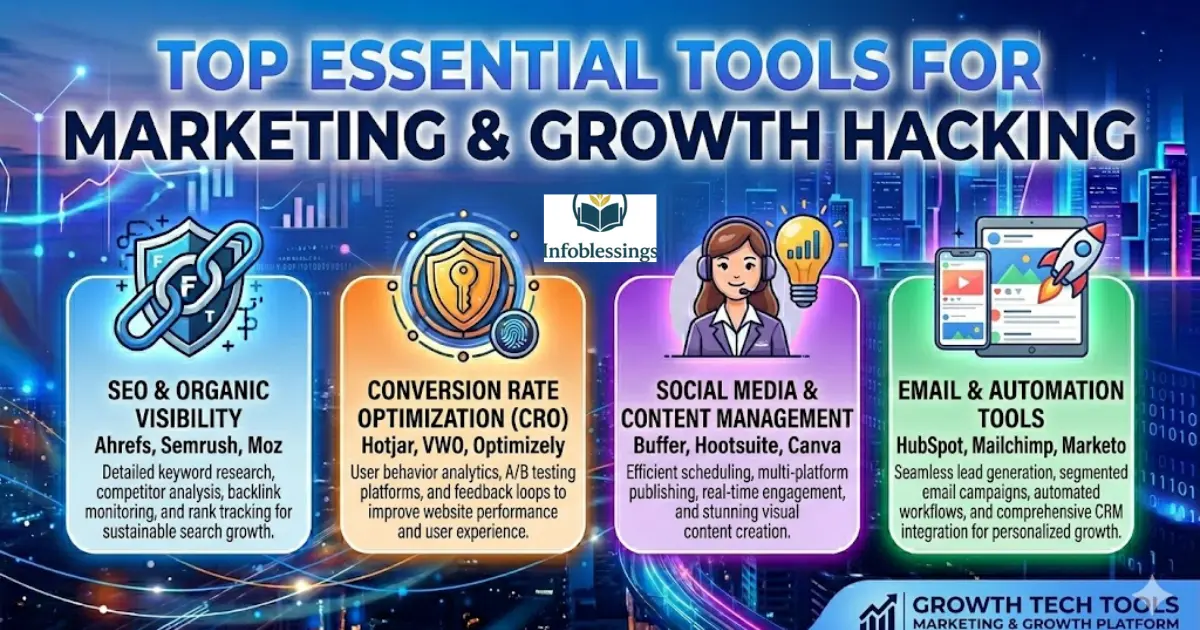
Marketing is key to acquiring users, retaining customers, and scaling a startup. Growth hacking tools help automate campaigns, analyze audience behavior, and identify opportunities.
Essential Tools:
- HubSpot – CRM with inbound marketing, email automation, and analytics.
- Buffer – Social media scheduling and performance tracking.
- Mailchimp – Email marketing campaigns to nurture leads efficiently.
Real-Life Example: Startups using HubSpot saw a 40% increase in lead conversions within six months due to targeted automation and personalized campaigns.
Project Management and Collaboration Tools
Managing a startup requires smooth team collaboration and project tracking. These tools reduce miscommunication and help teams meet deadlines.
Top Tools:
- Asana – Task and project management with timelines and progress tracking.
- Monday.com – Visual project boards for workflow management.
- ClickUp – Comprehensive platform combining tasks, docs, and goals.
Step-by-Step Tip: Assign tasks with clear deadlines, use visual timelines for projects, and hold weekly reviews to improve team efficiency.
Analytics and Insights Tools
Data-driven decisions are crucial for startup success. Analytics tools provide insights into user behavior, marketing ROI, and overall growth metrics.
Recommended Tools:
- Google Analytics – Track website traffic and user engagement.
- Hotjar – Understand user interactions with heatmaps and session recordings.
- Tableau – Visualize complex data for actionable insights.
Pro Insight: Regularly monitor KPIs like customer acquisition cost, churn rate, and conversion rates to make informed business decisions.
Step-by-Step Guide to Choosing the Right Tools
Selecting the best growth navigate startup tools requires a strategic approach. Follow these steps:
- Identify Your Startup’s Needs – List areas where your startup struggles (e.g., marketing, project management, analytics).
- Set a Budget – Determine how much you can invest in tools without overextending your finances.
- Evaluate Features – Compare tools based on functionality, integration capabilities, and scalability.
- Test Free Trials – Many platforms offer trial periods; test multiple options to see which fits your workflow.
- Seek Expert Opinions – Read reviews, case studies, and testimonials from startups in similar industries.
Pro Tip: Focus on tools that integrate seamlessly with existing systems to avoid workflow fragmentation.
Key Benefits of Using Growth Navigate Startup Tools
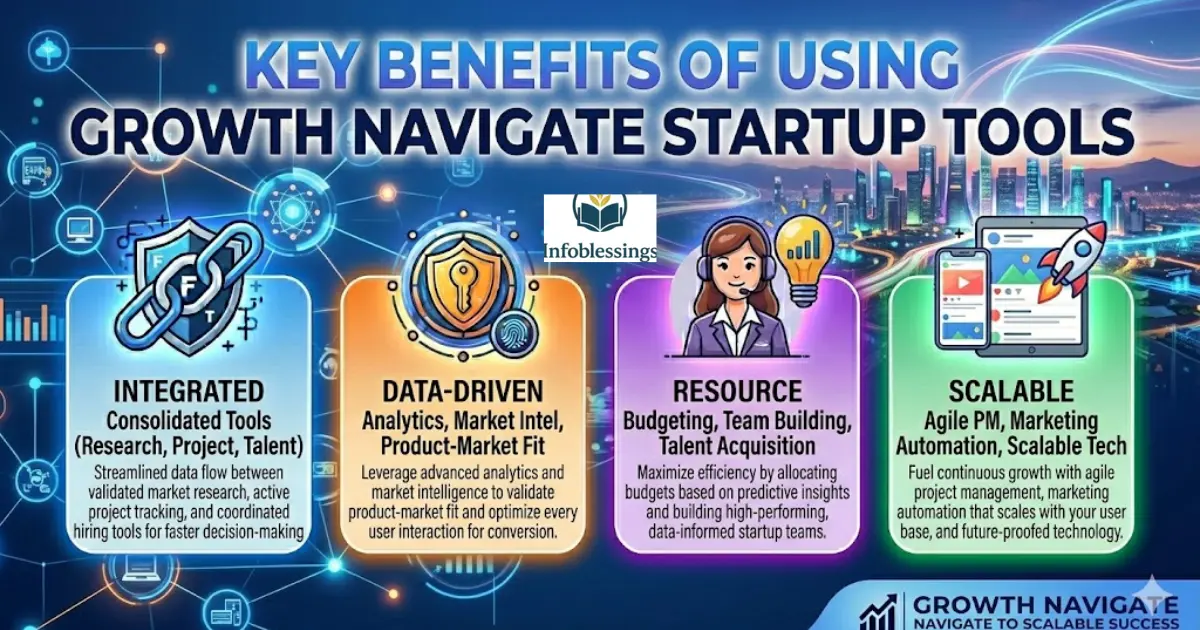
Startups using these tools enjoy multiple advantages:
- Boost Productivity – Automate repetitive tasks and streamline team workflows.
- Enhance Collaboration – Centralize communication and project management.
- Make Data-Driven Decisions – Access insights that guide strategic planning.
- Save Time and Costs – Reduce operational inefficiencies and manual errors.
- Accelerate Growth – Scale marketing, operations, and product development efficiently.
Common Mistakes to Avoid
Even with the best tools, startups often make avoidable errors:
- Tool Overload – Using too many platforms can confuse teams and reduce efficiency.
- Ignoring Training – Not providing team training leads to underutilization of tools.
- Skipping Analytics – Failing to track KPIs prevents informed decision-making.
- Neglecting Integration – Tools that don’t sync waste time with duplicate data entry.
- Focusing Only on Features – Choosing tools based solely on popularity rather than specific needs.
Expert Tips for Startup Growth
Here’s how experts recommend leveraging growth navigate startup tools effectively:
- Prioritize Essential Tools First – Start with 3–5 core tools before expanding.
- Automate Repetitive Tasks – Use marketing automation and workflow tools to save time.
- Regularly Review KPIs – Monthly analytics audits prevent wasted resources.
- Encourage Team Feedback – Get input on tool usability and workflow improvements.
- Stay Updated – SaaS tools often release new features—adapt to leverage them fully.
Conclusion
Navigating a startup’s growth journey is challenging, but the right growth navigate startup tools can transform how you operate, market, and scale. By choosing tools tailored to your startup’s needs, automating repetitive tasks, and making data-driven decisions, you’ll accelerate growth, save time, and improve team productivity.
Start today: evaluate your startup’s pain points, test the right tools, and implement strategies that guide your startup toward long-term success.
FAQs
Q1: What are the best growth navigate startup tools for beginners?
A: Tools like Trello, Notion, and HubSpot are beginner-friendly, helping startups manage projects, organize workflows, and automate marketing easily.
Q2: Can growth navigate startup tools improve productivity?
A: Yes, tools such as Asana, Slack, and ClickUp streamline tasks, enhance team collaboration, and reduce manual errors, boosting overall productivity.
Q3: How do I choose the right tools for my startup?
A: Identify key challenges, evaluate tools based on features and scalability, test free trials, and gather team feedback before committing.
Q4: Are there free growth navigate startup tools available?
A: Yes, tools like Trello, Notion, Slack (free tier), and Google Analytics offer free versions suitable for small startups.
Q5: How do analytics tools help in startup growth?
A: Analytics tools like Google Analytics and Hotjar provide insights into user behavior, marketing effectiveness, and operational KPIs, helping startups make data-driven decisions.

I am an expert writer committed to delivering insightful, engaging, and results-driven business content. With a deep understanding of market trends and evolving industry dynamics, I create content that informs, empowers, and helps readers stay ahead in today’s competitive landscape.
My focus is on producing high-quality, value-driven content that not only captures attention but also builds trust and long-term impact. Let’s achieve more together!